Example Independent Insights Articles
Here are some sample independent insight led articles
76 articles


Everything you need to know about liposomal delivery
Learn how liposomal delivery works, who benefits, and how to judge liposomal supplements in New Zealand.

The Hidden Tax on Every Supplement You Buy
Most shoppers compare supplements by milligrams and price per bottle. But the number that actually determines whether a supplement works - bioavailability - is nowhere on the label.
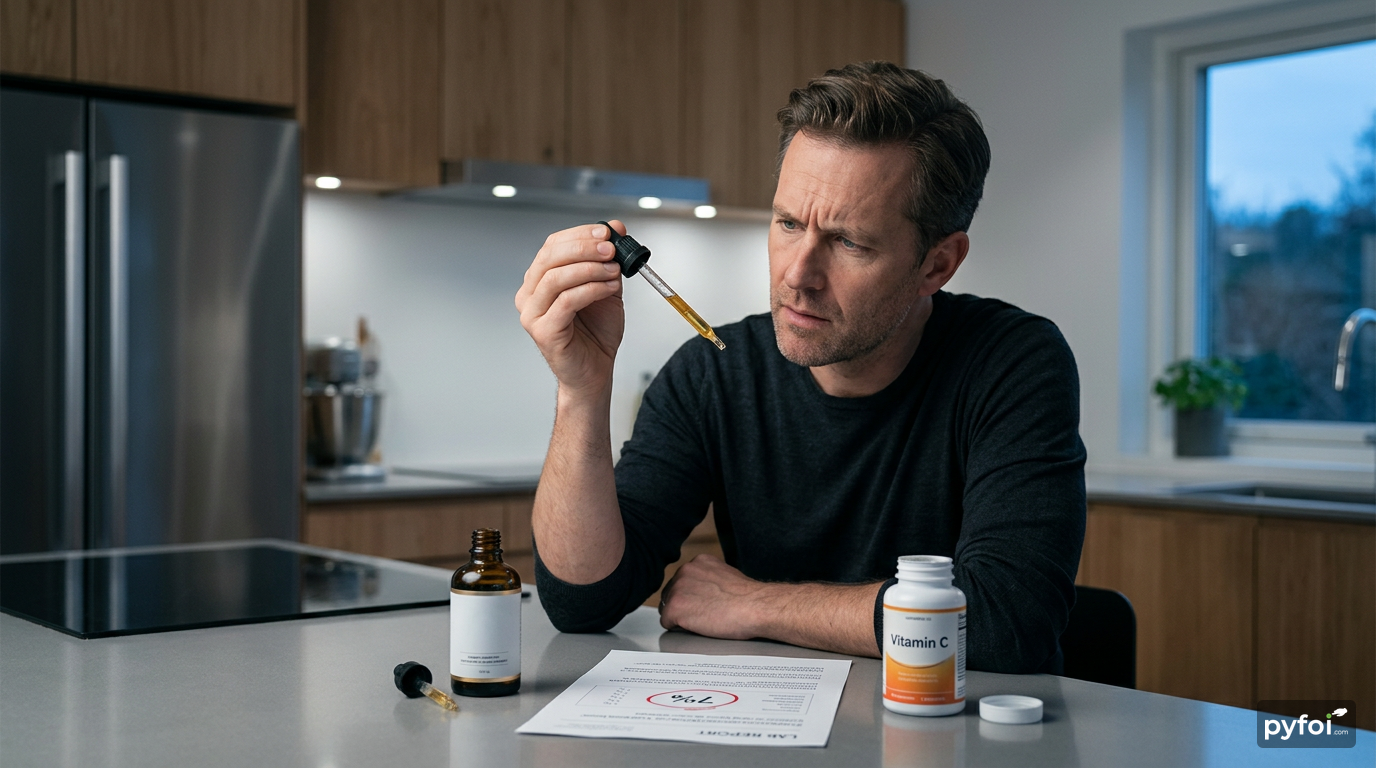
Paying Premium Prices for a Fake Liposomal Supplement?
Independent lab testing shows most liposomal supplements contain no real liposomes. Learn the four checks that separate genuine products from label-only fakes.

The Nutrient Gap Your Doctor Will Never Diagnose
A quarter of New Zealanders have inadequate zinc intake and a third are vitamin D deficient by winter. Learn why subclinical deficiency goes undiagnosed.

The Ageing Absorption Cliff After 50
After 50, your body absorbs less from every supplement you take. Learn why stomach acid loss, PPIs, and enzyme decline create a hidden nutrient gap.

Your Gut Is Quietly Sabotaging Your Supplements
64% of New Zealand adults have gut symptoms that silently reduce supplement absorption by 30-60%, making format choice more important than brand or dose.

Supplement Stacking Trap: Why More Is Less
Taking multiple supplements together creates absorption conflicts that reduce nutrient uptake. Learn how mineral competition wastes money and what formats avoid it.

The Start-Stop Supplement Trap That Costs You Thousands
Millions of supplement users quit because they feel nothing - then restart months later. The problem isn't the nutrient. It's how little of it your body ever absorbed in the first place.

Why Doubling Your Supplement Dose Is Not Doubling Your Results
Your body hits an absorption ceiling on most standard supplements. Escalating dose wastes money and delivers near-zero extra nutrient to your bloodstream.

Are You Trusting Regulations That Do Not Actually Exist?
New Zealand's supplement regulations date from 1985 and contain no provisions for liposomal claims. Every quality claim on the bottle is self-declared, with no pre-market approval and only complaint-driven enforcement.

The Double Deficit Hiding in New Zealand's Clean, Green Food
New Zealand's volcanic soils are naturally low in selenium, zinc, and iodine - meaning food grown here starts nutritionally behind. Standard supplements then fail to close the gap, creating a compounding deficit most Kiwis never see.

Is Your Liposomal Supplement Already Dead?
Liposomal supplements degrade through heat, light and oxidation before you open the bottle. Learn how to spot degraded products and protect your investment.
Your Gut Is Quietly Sabotaging Your Supplements
64% of New Zealand adults have gut symptoms that silently reduce supplement absorption by 30-60%, making format choice more important than brand or dose.
Why does nothing seem to work?
You have tried the vitamin C. You have added magnesium. Maybe a B-complex for energy. Three months in, you feel exactly the same. So you do what most people do - blame the brand, switch products, or give up entirely.
But what if the supplement was never the problem? A New Zealand population study found that 64% of adults aged 26 had at least one functional gastrointestinal symptom [1]. That is not a niche statistic. It means more than half the people buying supplements have a gut that is actively working against absorption - and almost none of them realise it.
What if your gut is the bottleneck, not the product?
Most supplement shoppers evaluate products by dose, ingredient quality, and price. That makes sense if your digestive system is functioning well. But for the majority of New Zealand adults, it is not - and this changes the entire equation.
Think of your gut like a shipping dock. If the loading bays are closed and the conveyor belts are jammed, it does not matter how big the delivery truck is - most of the cargo never makes it inside.
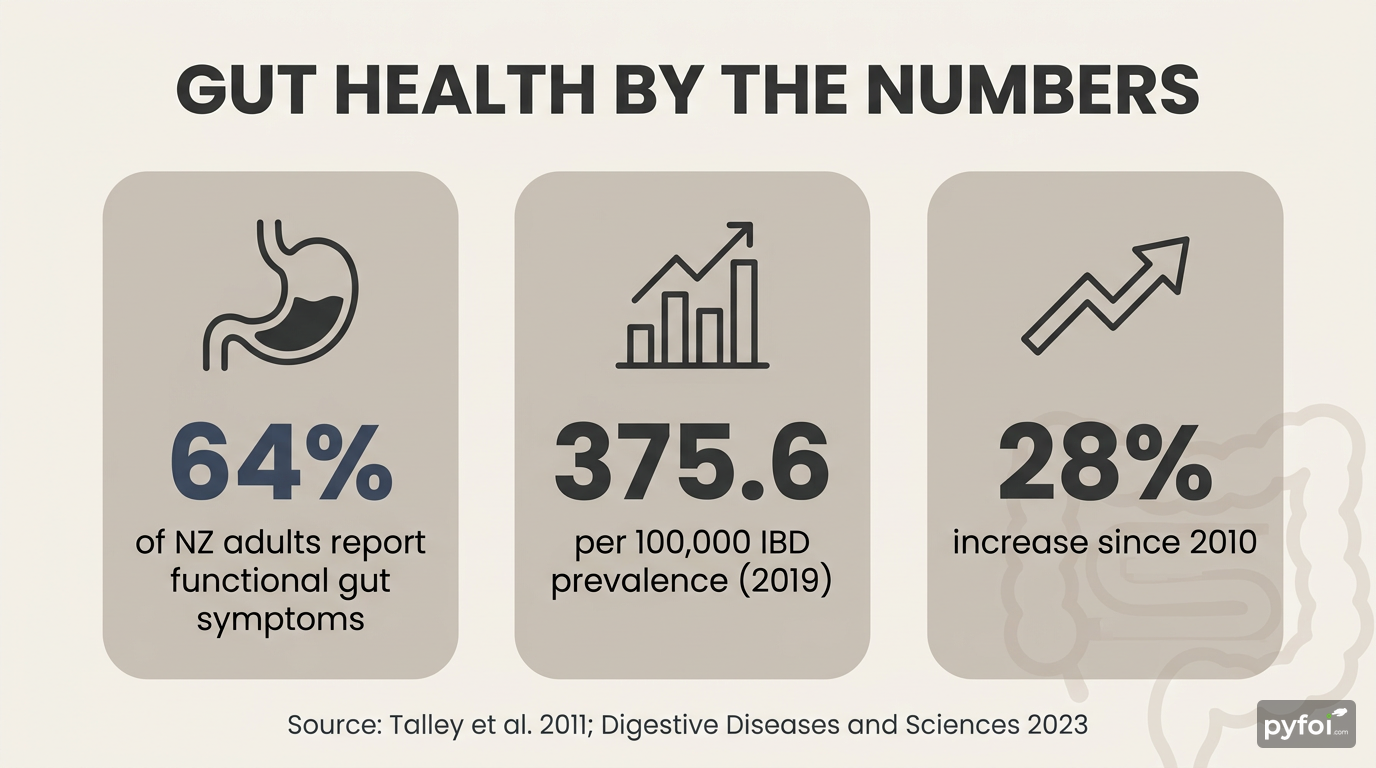
New Zealand has among the world's highest rates of inflammatory bowel disease, with a prevalence of 375.6 per 100,000 in 2019 - up 28% from 2010 [2]. Add IBS, reflux, and dysbiosis, and compromised gut function is closer to the norm than the exception.
The questions worth asking are not "which brand should I buy?" but: is my gut actually absorbing what I take? Does my format account for my digestive reality? And how much am I wasting on nutrients that never reach my bloodstream?
The evidence is hard to ignore
Once you look at how gut conditions affect absorption, the scale of the problem becomes clear:
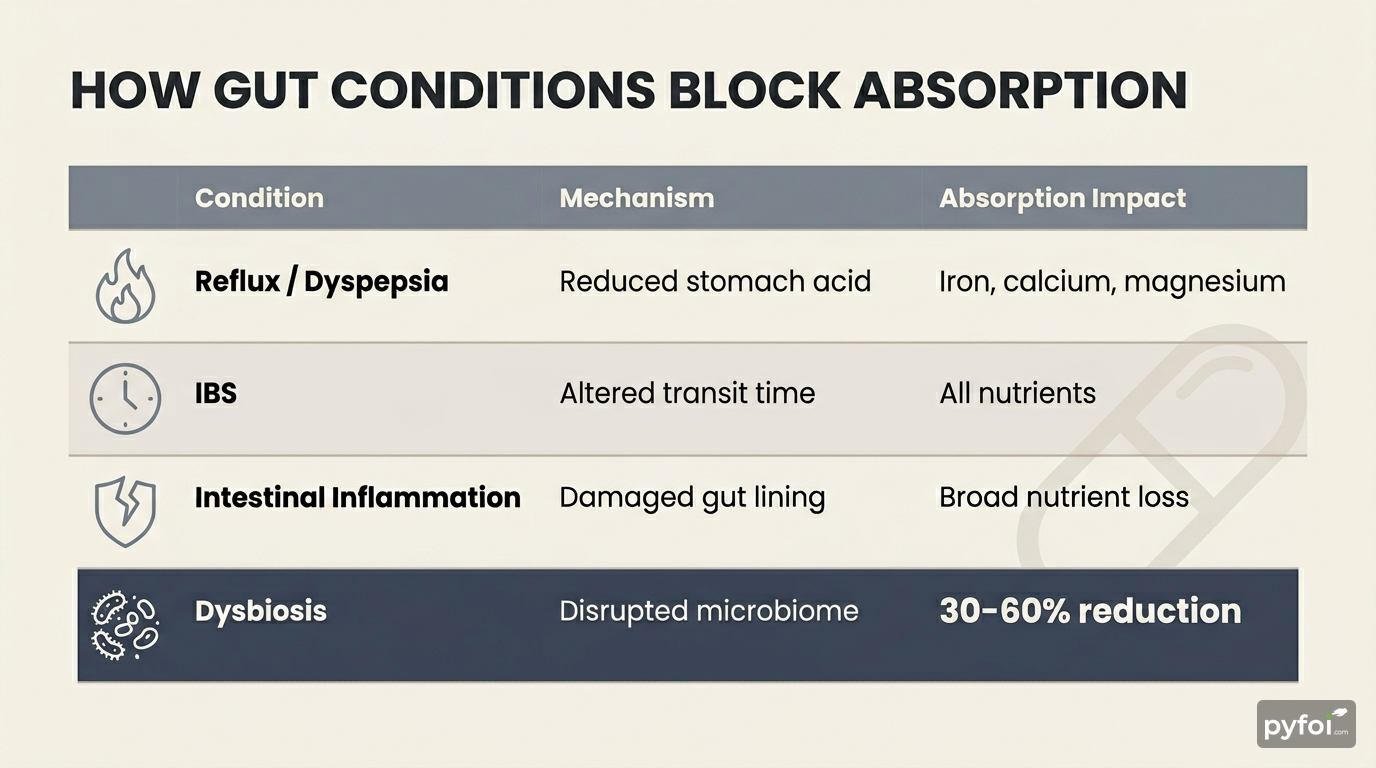
- Reflux and dyspepsia reduce stomach acid, which your body needs to break down and solubilise minerals like iron, calcium, and magnesium [3].
- IBS alters transit time, meaning food and supplements move through the intestine too quickly for adequate nutrient uptake [3].
- Intestinal inflammation - from conditions like Crohn's or ulcerative colitis - physically damages the absorptive surface of the gut lining [3].
- Dysbiosis disrupts the microbiome's role in vitamin synthesis and barrier function, reducing nutrient uptake by 30-60% [4][5].
- More than 80% of New Zealand aged-care residents had inadequate intakes of calcium, selenium, magnesium, and vitamin B6 - even with supplementation [6].
These are measurable absorption losses happening in the majority of supplement users.
What silent malabsorption actually feels like
Picture two people buying the same vitamin C off the same shelf. One has a healthy gut. The other has mild reflux managed with antacids and occasional bloating they have learned to ignore.
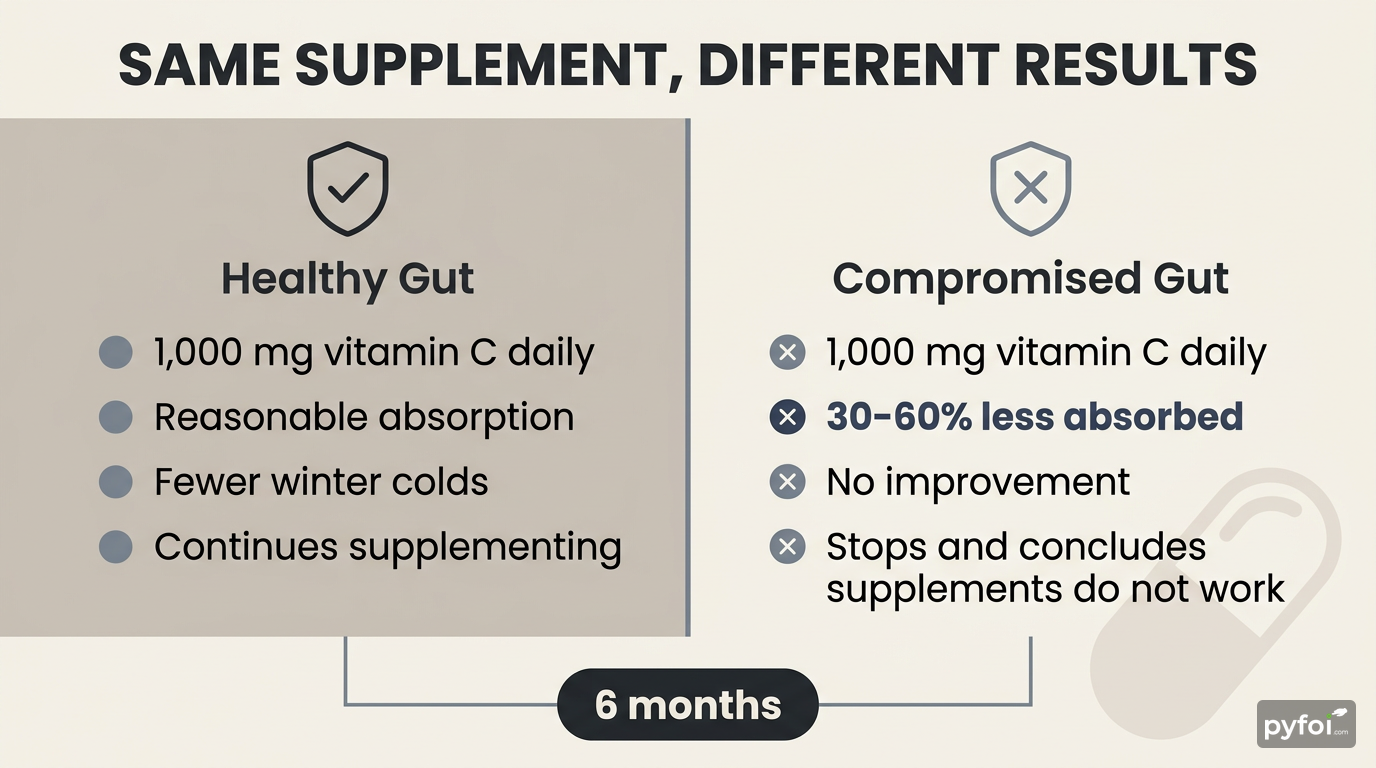
Both take 1,000 mg daily. The first absorbs a reasonable portion. The second, with compromised gut function, may absorb 30-60% less [4][5]. After six months, the first person notices fewer winter colds. The second notices nothing, concludes supplements are a waste of money, and stops.
The frustrating part? The second person needed supplementation more - they just chose a format their body could not use.
How to supplement when your gut is not cooperating
If you suspect your digestion is less than perfect - and statistically, it probably is - rethink your approach with these filters:
- Format over dose. A delivery system that bypasses damaged gut pathways will outperform a higher-dose standard capsule. Liposomal formats use phospholipid layers to protect nutrients through digestion and improve absorption even in compromised guts [7][8].
- Gut status first. If you have reflux, IBS, bloating, or any inflammatory bowel condition, standard tablets face an uphill battle before they even dissolve.
- Cost per absorbed milligram. A cheaper supplement that your body cannot absorb is not cheaper - it is wasted money with a lower price tag.
Making smarter supplement choices from here
Audit your gut honestly. Bloating, reflux, irregular bowel habits, and food sensitivities all signal compromised absorption. You do not need a formal diagnosis to act - the statistics suggest more people are affected than not [1].
Switch formats before switching brands. If a supplement has not delivered results after three months, the answer may not be a different brand at the same dose. A liposomal or liquid format may get more of the active ingredient past your gut's bottlenecks [7][8].
Prioritise the nutrients that leak most. Minerals like calcium, magnesium, and iron are particularly vulnerable to absorption loss in compromised guts because they depend heavily on stomach acid and intact intestinal lining [3].
Match your format to your reality. If you are young, healthy, and digestion is smooth, standard capsules may serve you well. But if you have any ongoing gut symptoms - even mild ones - a format designed to work around those limitations will deliver better value per dollar.
Ask your pharmacist about absorption, not just ingredients. "Given my digestive issues, what format gives me the best chance of actually absorbing this?" If they cannot answer, that tells you something.
The majority of New Zealand adults are not supplement failures. They are absorption failures - taking the right nutrients in a format their gut was never going to let through. Once you fix the delivery problem, the supplement finally gets a fair chance to work.
You may also be interested in these independent articles
Sources
- Functional gastrointestinal disorders in New Zealand - Talley et al., PubMed, 2011
- Incidence of Inflammatory Bowel Disease in New Zealand Remains High - Digestive Diseases and Sciences, 2023
- Malabsorption Syndromes - StatPearls, NCBI Bookshelf
- Gut Biome-Mediated Barriers to Nutrient Absorption - MDPI, 2024
- Why Your Body Isn't Absorbing Nutrients Properly - Passion 4 Health
- Inadequate Micronutrient Intakes in NZ Aged-Care Residents - Journal of Human Nutrition and Dietetics, 2025
- Pharmacokinetic Analyses of Liposomal and Non-Liposomal Multivitamin/Mineral Formulations - PMC, 2023
- Do Liposomal Vitamin C Formulations Have Improved Bioavailability? A Scoping Review - Carr, 2025
© 2026 pyfoi. All rights reserved.